Some stories are timeless. Some are much more than stories — they are a part of who we are, what we believe in and the legacy we carry forward. As Arun Govil, who immortalised Lord Rama for generations through Ramanand Sagar’s iconic Ramayan on Doordarshan, so beautifully puts it, “Ramayan humara gaurav hai, humara maan hai, abhimaan hai, humari sanskriti hai, dharohar hai. Hindutva ke liye sab kuch Ramayan hai.” We completely resonate with these sentiments. The Ramayana is not merely an epic that has been passed down through generations; it is an integral part of India’s cultural and spiritual consciousness, cherished with reverence, pride and devotion. And it is this extraordinary legacy that Ramayana: Part One sets out to bring alive on a grand cinematic canvas, inviting audiences to step into the world of one of India’s greatest epics through breathtaking visuals, powerful storytelling and timeless emotions.
There are films you watch, and then there are films that completely engulf you in their world. Nitesh Tiwari’s Ramayana: Part One belongs to the latter category. Now playing in cinemas worldwide, this much-awaited cinematic retelling is an ambitious celebration of Indian mythology, bringing an epic that generations have grown up listening to, reading and watching to life on an extraordinary cinematic canvas.
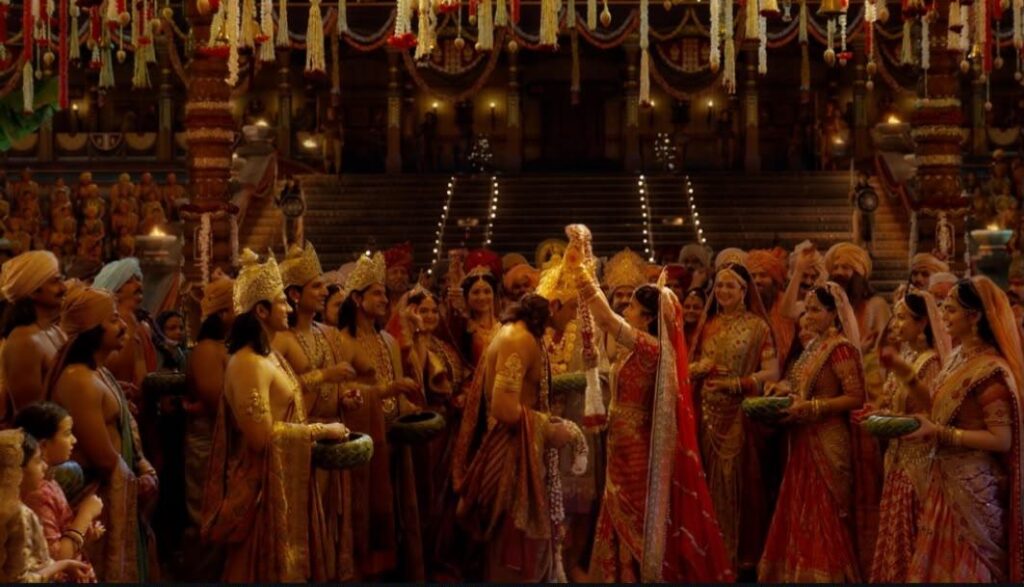
What makes the experience particularly special is the sheer grandeur of the world created on screen. From its larger-than-life settings to the visual detailing of its characters and environments, the film draws you into a beautiful world of Hindu mythology. There is a sense of scale and ambition that makes the experience truly monumental, allowing audiences to immerse themselves in a world that feels both familiar and remarkably new.
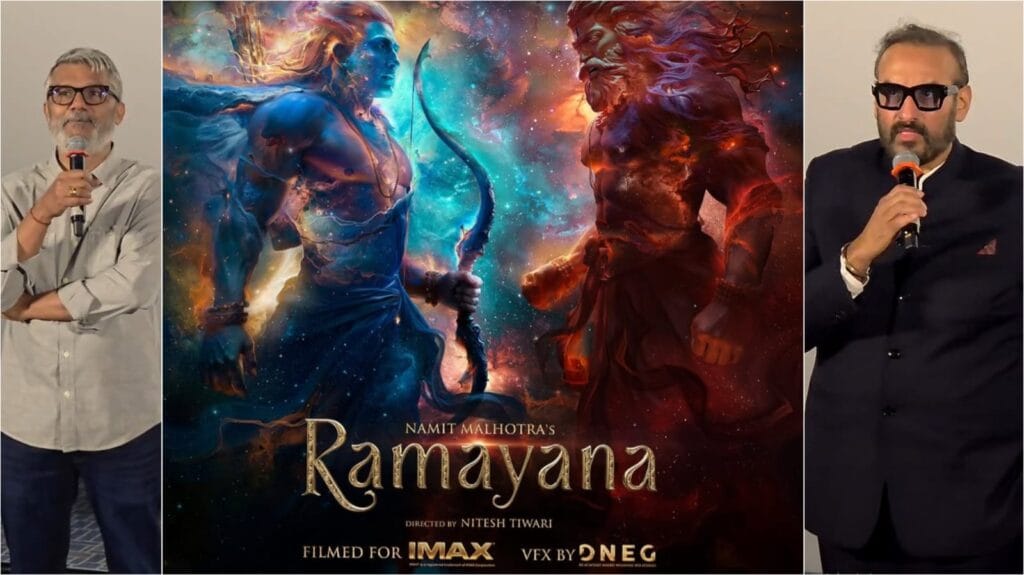
And this is where Namit Malhotra’s vision, backed by Prime Focus Studios and DNEG, deserves tremendous appreciation. The visual effects are not merely there to create spectacle; they help build an entire mythological universe that audiences can experience and connect with. The technical execution, detailing and sheer scale demonstrate what Indian filmmaking talent can achieve when storytelling, technology and international expertise come together. In several sequences, the visual ambition stands shoulder to shoulder with the biggest international cinematic productions, making a compelling case for Indian cinema on the global stage.
The Characters Who Bring the Epic to Life
At the heart of this spectacle are characters who have lived in India’s collective consciousness for centuries. Bringing them to the screen comes with enormous expectations, and the principal cast makes a compelling contribution to the experience.
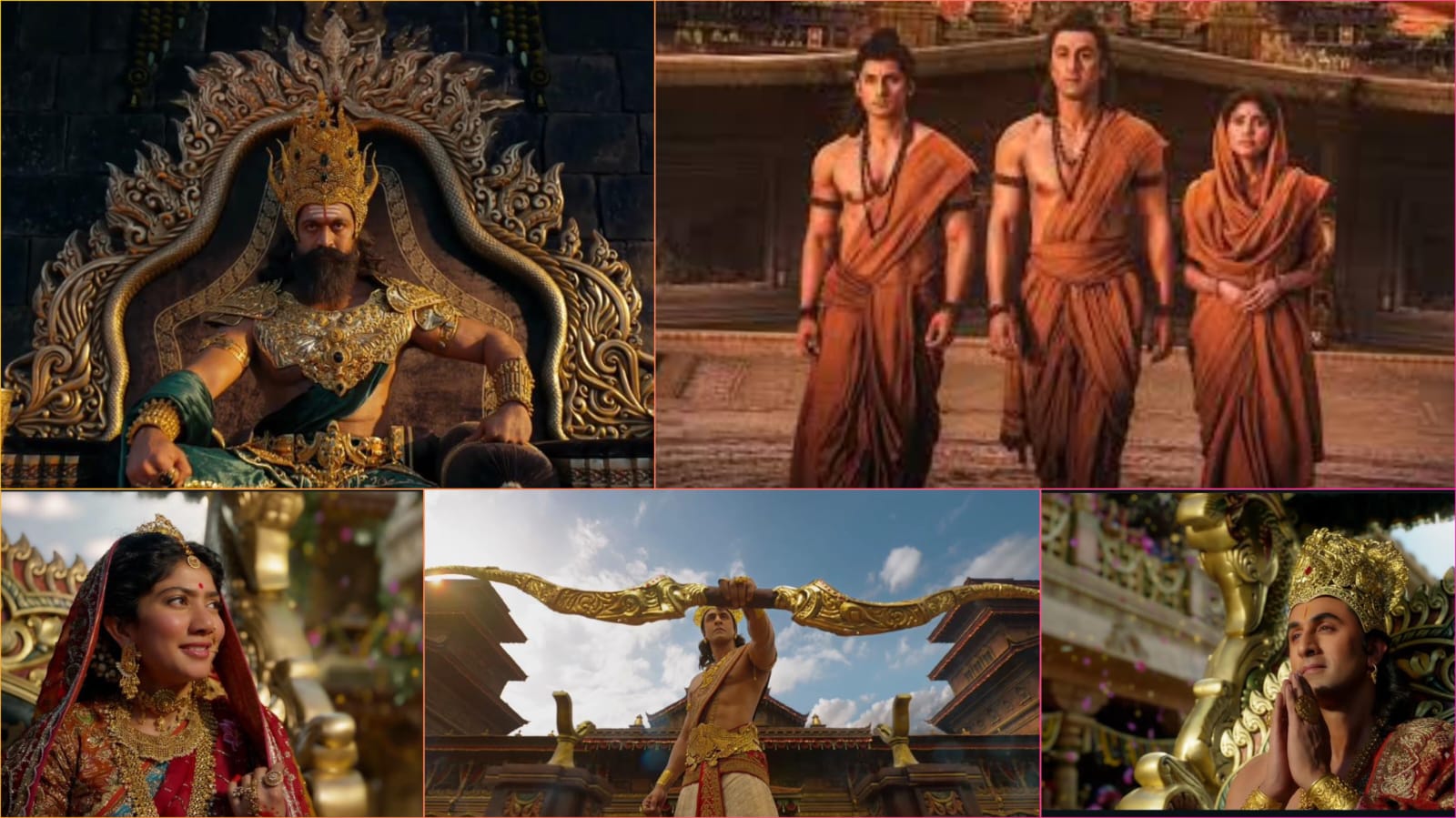
Ranbir Kapoor as Lord Rama brings a dignified presence to the character. His portrayal captures the calm, composure and strength associated with Maryada Purushottam, giving Rama a certain grace that works beautifully within the film’s larger canvas. He is particularly effective in conveying the character’s righteousness and inner strength.
Ravie Dubey as Lakshmana is equally impressive. His portrayal brings out the loyalty, conviction and intensity of Rama’s younger brother. The camaraderie between the two characters adds an important emotional dimension to the unfolding narrative, and both actors make their presence felt.
However, one of the biggest talking points of the film is undoubtedly Yash as Ravana. The actor brings an extraordinary screen presence and an imposing aura to the character. There is a commanding quality to his performance that makes every appearance memorable. He gives Ravana the larger-than-life personality the character demands, while making him an intriguing and formidable presence within the story.
And then comes the much-talked-about ten-headed Ravana sequence. This is one of those moments that makes you sit up and take notice. The visual presentation, detailing and Yash’s performance come together to create a spectacular cinematic moment. The ten heads are more than a striking visual representation; they bring to life the multiple dimensions and conflicting human traits associated with Ravana. Yash’s sheer screen presence makes the sequence even more impactful. It is easily one of the film’s most memorable highlights and a scene that stays with you long after you leave the theatre.
Sai Pallavi as Sita is passable in comparison to the impact created by the other principal characters. While her presence adds to the unfolding narrative, we would have liked a little more emotional depth and screen impact from the character.
Nevertheless, it is the collective experience of watching these familiar mythological characters come alive on such a magnificent scale that makes the film special.
An Ensemble Cast That Adds Depth to the Epic
Beyond the principal characters, Ramayana: Part One brings together an impressive ensemble of actors, with several familiar faces stepping into characters that have been part of India’s storytelling tradition for generations.
One of the most interesting casting choices is Arun Govil as King Dasharatha. For an entire generation that remembers him as Lord Rama in Ramanand Sagar’s iconic television adaptation, seeing him now as Rama’s father brings an added emotional connection. Lara Dutta as Queen Kaikeyi brings a regal presence to a character whose decisions set the epic’s central events into motion.
Kajal Aggarwal as Mandodari, Ravana’s queen, and Rakul Preet Singh as Surpanakha, his sister, add to the ensemble, while Vivek Oberoi as Vidyutjihva brings another interesting character from the Lanka narrative to the screen. Each of these actors contributes to the larger mythological world, making the casting feel expansive rather than restricted to the central protagonists.
A particularly noteworthy contribution comes from Anupam Kher, who lends his voice to Jatayu. The character’s encounter with Ravana is among the film’s emotionally significant sequences. Jatayu’s courage and determination to protect Sita make this moment particularly moving, and Kher’s voice adds gravitas to the character.
There is also a lovely casting connection in Arun Govil’s appearance as Dasharatha, bringing together the legacy of an iconic television Ramayana with this ambitious new cinematic interpretation. It is these familiar faces, along with actors from different generations and film industries, that give the film’s supporting cast its distinctive character.
The Hanuman Chalisa and a Devotional Surprise That Steals the Closing Moments
And just when you think the cinematic experience has reached its conclusion, the film has one more special moment waiting for the audience.
The closing portions bring in a powerful rendition of the Hanuman Chalisa, featuring the voices of Diljit Dosanjh, Sukhwinder Singh, Mohit Chauhan, Kailash Kher and Anirudh Ravichander. The devotional chant creates an entirely different atmosphere in the auditorium, building anticipation and an unmistakable sense of devotion.
But the real surprise awaits in the post-credit sequence.
The introduction of Pavanputra Hanuman, Lord Rama’s greatest devotee, is a moment that genuinely electrifies the audience. As the mighty figure appears with his gada, the devotional fervour in the auditorium is palpable. There is an unmistakable sense of excitement, reverence and anticipation as the audience gets its first glimpse of the character, with the credits revealing Sunny Deol as the actor portraying Hanuman.
The makers wisely keep his complete appearance under wraps, offering just enough of a glimpse to leave audiences wanting more. And that is precisely what makes the sequence so effective. The sight of Hanuman coming into this cinematic universe, accompanied by the powerful devotional chant, is an emotionally charged moment that had audiences responding with shouts of devotion and Jai Shri Ram.
Another interesting reveal is Raghav Juyal as Meghnath, Ravana’s formidable son, setting up another important character for the next instalment.
For a film rooted in the Ramayana, ending with the arrival of Hanuman feels particularly appropriate. It leaves the audience with a sense of devotion and anticipation, while setting the stage for the next chapter of this epic.
Beyond the grandeur, there is the quieter emotional moments that give the film an added soul. The almost silent, tender whisper of ‘Hey Ram’, beautifully placed during the final moments of King Dasharatha and Jatayu, carries a profound sense of devotion and piety. There is something deeply moving about these moments of remembrance, where the name of Lord Rama becomes an expression of faith, surrender and an emotional farewell.
A Technical Achievement with Global Ambitions
If the storytelling brings the mythology to the forefront, the technical craftsmanship gives it the extraordinary scale it deserves. This is where Ramayana: Part One makes a particularly strong impression. Namit Malhotra’s association with Prime Focus Studios and DNEG brings together international visual-effects expertise and filmmaking technology to realise an ambitious cinematic vision. The result is a production that demonstrates the possibilities of Indian cinema when creative imagination, technical excellence and resources come together.
The film’s cinematography gives it an expansive visual language, capturing the scale of its settings and the larger-than-life presence of its characters. The production design contributes significantly to creating this mythological world, while the visual effects blend the physical and fantastical elements into a sweeping cinematic experience.
The action sequences lend the larger confrontations their scale and physicality, adding to the sense of spectacle without taking away from the mythology at the heart of the story.
And then there is the music.
The collaboration between global music maestro Hans Zimmer and India’s own A.R. Rahman is another major highlight of the project. Their combined musical sensibilities lend the film an international dimension, with the background score adding to the intensity and emotional sweep of its larger moments. The music becomes an important part of the cinematic experience, particularly when the narrative moves into its more dramatic and visually expansive sequences.
Taken together, the cinematography, production design, visual effects, action choreography, sound and background score demonstrate the considerable technical expertise that has gone into creating this film. It is a showcase of Indian filmmaking ambition with the technical sophistication to command international attention.
The Verdict: An Epic That Must Be Experienced on the Big Screen
Ramayana: Part One is best experienced in a theatre. The scale of its visuals, the detailing, the music and the larger-than-life sequences deserve the immersive experience of a cinema hall, preferably on a premium large screen.
For audiences who have grown up with the Ramayana, it offers an opportunity to revisit a beloved epic through a spectacular new cinematic lens. For younger generations and Indians living across the globe, it is an opportunity to reconnect with a story that is deeply woven into our cultural identity.
The film has its moments where certain character portrayals could have offered greater emotional depth, but its ambition, visual craftsmanship and the sheer scale of the mythology unfolding on screen make it a significant cinematic undertaking.
And that final devotional experience, with the Hanuman Chalisa filling the auditorium and the first glimpse of Sunny Deol as Pavanputra Hanuman, leaves the audience with an entirely different kind of excitement.
Our recommendation: Watch it on the biggest screen possible. This is an Indian epic that deserves to be experienced, celebrated and shared with the world.