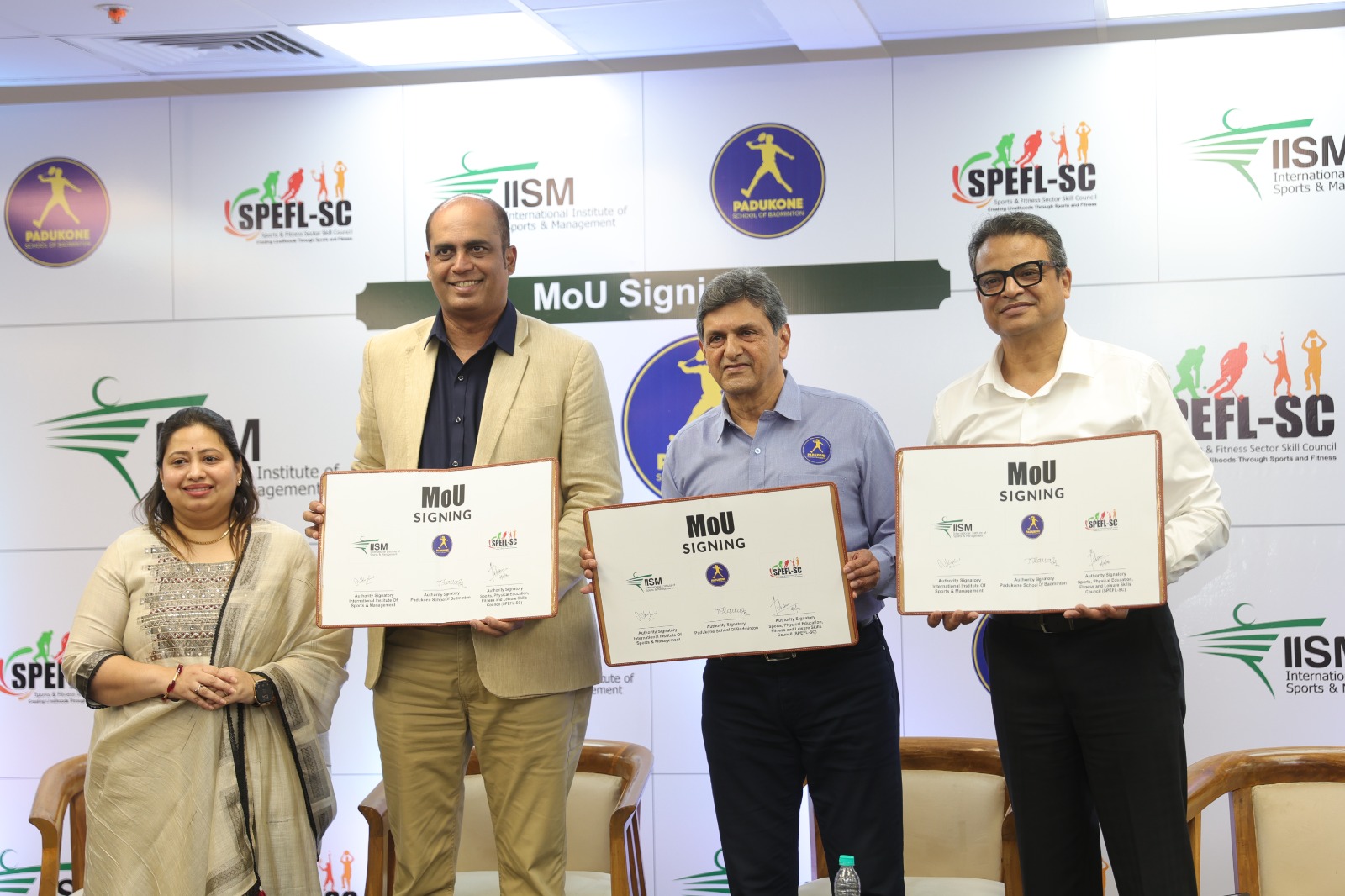
Legendary Indian badminton icon Prakash Padukone has made a compelling prediction about the future of Indian sport — the country’s next generation of champions will increasingly emerge from Tier 2 and Tier 3 cities, not the metros, provided young athletes get access to quality infrastructure, professional coaching and the right equipment.
Speaking on the sidelines of the MoU signing between the Padukone School of Badminton and the International Institute of Sports Management (IISM), the former All England champion highlighted the rapid growth of badminton across India and stressed the urgent need to strengthen grassroots development and elevate coaching standards nationwide.
Padukone noted that the talent in smaller towns has always existed — what was missing was the ecosystem. “Earlier, the talent was always there in Tier 2 and Tier 3 cities. But there was no infrastructure, there was no coaching, there was no equipment. You only need these three things in any sport. You first need a good infrastructure, then coaches, and then equipment,” he said.
According to Padukone, that situation is gradually changing as better facilities and greater access to sporting resources allow young athletes from smaller towns to pursue their ambitions. “I think this is a change. The bigger cities, I see this trend going forward. We will get most of our champions from smaller towns, smaller districts. They will start their initial career there, then move to bigger cities where they have better facilities,” he added.
For Padukone, the focus now needs to be on strengthening the foundation of the sport rather than concentrating only on elite athletes and international medals. He believes the priority should be to get more children playing badminton while ensuring they learn the correct techniques from the beginning.
He recalled a recent tournament involving the Under-15 and Under-17 categories that had around 4,000 entries, requiring 10 days of competition and 22 courts during the first five days. Such numbers, he said, demonstrate not only the growing popularity of badminton but also the scale of the challenge facing the country’s coaching system.
“There is definitely a big gap, and I think there is a very urgent need to address the quality of coaching. They are doing a reasonable job, but I think a lot more needs to be done,” Padukone said.
Padukone also stressed that responsibility for a player’s progress cannot rest entirely with the coach. He spoke about the tendency among some young players to change academies after a series of defeats, often blaming their coaches instead of examining their own shortcomings — a mindset shift he believes is essential for building truly world-class athletes.
As India continues its remarkable rise in world badminton — from Olympic medals to Thomas Cup glory — Padukone’s vision offers both a roadmap and a reality check: the next PV Sindhu or Lakshya Sen is likely honing their skills right now in a small-town court, waiting only for the infrastructure, coaching and equipment to match their ambition. Initiatives like the Padukone School of Badminton’s partnership with IISM signal that the foundation is being laid — but as the legend himself reminds us, the gap in grassroots coaching quality must be closed, and closed urgently, if India’s badminton dream is to reach every corner of the country.