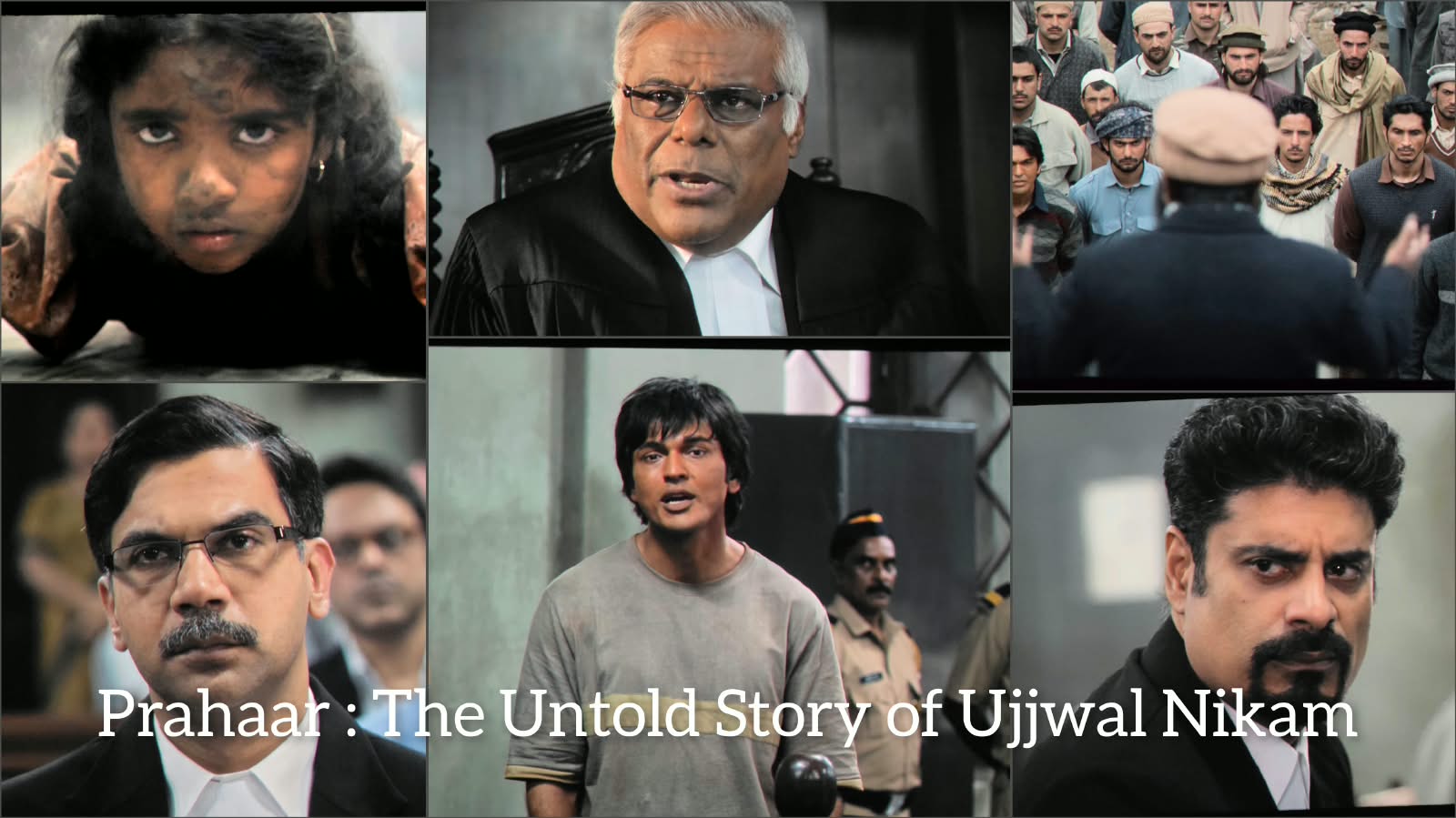
Dir. Avinash Arun | Cast: Rajkummar Rao, Lalit Prabhakar, Ashish Vidyarthi, Jaideep Ahlawat, Sikander Kher, Wamiqa Gabbi | Writer: Sumit Roy | Producer: Dinesh Vijan (Maddock Films) Runtime: ~2 hrs 40 mins | In theatres 16 October 2026
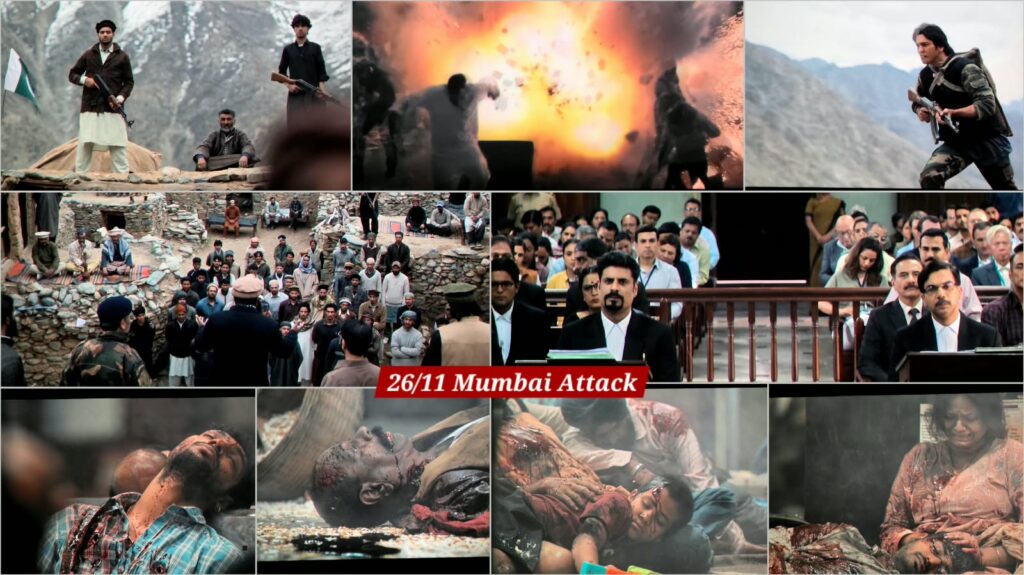
Avinash Arun’s Prahaar: The Untold Story of Ujjwal Nikam brings the extraordinary journey of one of India’s most formidable lawyers to the screen, turning a story of law, conviction and courage into compelling cinema. Rather than focusing purely on the visual chaos of the 26/11 attacks, the film explores the grueling, high-stakes courtroom battle, diving deep into the intrinsic details of the historic trial through the testimonies of traumatized witnesses, heartbroken victims, and ironclad evidence.
It brilliantly captures the behind-the-scenes realities — the intense domestic drama that seeps into Ujjwal Nikam’s life, testing the bonds between every member of his family, even as the mounting pressure, raw frustration, and collective anger of an entire nation closes in, as the entire world turned its gaze toward India to see how its democratic institutions would react under fire. The film powerfully tackles the constitutional reality of why the world’s largest democracy meticulously proved a globally televised terrorist’s guilt through due process — proving that a fair trial is not a sign of national weakness, but the ultimate expression of moral superiority.
Core Themes & Narrative Depth
The narrative depth of Prahaar lies in how the prosecution transforms Kasab’s trial from a routine legal proceeding into a larger pursuit of accountability for a grieving nation. By keeping the 166 victims at the heart of the story, the film gives its legal battle a deeply human dimension.
The emotional core of Prahaar comes through in the way Nikam challenges the idea of Jannat that had been sold to vulnerable young minds through cross-border terror networks. His intense, deeply personal interactions with Kasab gradually strip away the romanticism surrounding terrorism, forcing him to face the human cost of his actions and the devastation he has caused.
This emotional journey reaches its peak in Nikam’s closing speech, where the courtroom battle becomes something larger — a shared quest for justice on behalf of every citizen affected by the tragedy. The sentiment of “Sare Jahan Se Acha; Sachmuch Hindustan Hai Hamara” reinforces the film’s belief in India’s moral and democratic values, even as it exposes the machinery of terror that exploits young minds. The film also briefly connects this battle to Nikam’s earlier work, including the 1993 Mumbai blasts case, reminding us that his pursuit of justice has been decades in the making.
Performances That Make an Impact
Rajkummar Rao’s Powerhouse Portrayal: Delivering a performance of immense intensity and restraint, Rajkummar Rao captures the absolute conviction and razor-sharp determination of a prosecutor carrying the weight of national memory. The physical transformation is striking, but it is the quiet, procedural moments — the pauses, the controlled fury, the exhaustion — that make this arguably his finest dramatic work.
An Unsettling Support Ensemble: An Unsettling Support Ensemble: Lalit Prabhakar adds a chilling, deeply controlled dimension to the narrative as Ajmal Kasab, building palpable tension without resorting to loud theatricality. Ashish Vidyarthi is commanding as Justice M.L. Tahaliyani. Jaideep Ahlawat is quietly formidable in his few scenes as Chaudhary Zulfiqar Ali, the Pakistani counterpart who arrives in Mumbai to disprove his nation’s involvement — his measured courtroom exchanges with Nikam crackle with unspoken geopolitical tension. Sikandar Kher brings bristling dignity to Abbas Kazmi, Kasab’s defence counsel who uses every trick in the legal manual yet steadfastly reminds the courtroom that even the most hated accused deserves a lawyer — embodying the very principle of due process the film champions. And Wamiqa Gabbi anchors the emotional home front as Jyoti Nikam, the wife and mother holding her fractured family together while her own health quietly deteriorates — the invisible, personal cost of a man who belongs to his nation more than to his home.
Emotional Anchors: Child artist Ritvik Sahore, playing Nikam’s son Aniket, and Diorr Varghese, as a young girl witness, bring critical emotional layers. The young girl’s poignant courtroom testimony highlights the profound human cost behind the pursuit of accountability.
Direction and Technical Prowess
Director Avinash Arun handles the sensitive subject with restraint and maturity, keeping the focus firmly on the courtroom and the pursuit of justice rather than turning the tragedy into spectacle. His direction gives the legal proceedings enough tension and emotion to keep the film engaging, while allowing the performances and courtroom exchanges to carry the weight of the story. A few portions could have moved more tightly, but Arun largely maintains a grounded and credible tone throughout.
That authenticity is no accident: writers Sumit Roy, Dushyant Arora and Vishal Tiwari ground the screenplay in documented court proceedings — Arora’s meticulous research ensuring every objection, deposition and cross-examination carries the weight of the real trial. It is this fidelity to record that allows the drama to feel both sweeping and true.
What elevates Prahaar from a compelling courtroom drama to a film with lasting impact, however, are two technical quotients working in perfect tandem. The first is the cinematography by Arun himself and Eeshan Kaushal — intimate, unshowy lensing that turns every courtroom exchange into a battle of wills and every quiet domestic scene into a study in unspoken grief. The second, and arguably the film’s greatest unsung weapon, is Alokananda Dasgupta’s background score: a genuinely challenging composition that burrows deep into the storytelling, adding profound emotional depth to both the legal tension and the personal and national subplots. Her music knows exactly when to surge and when to fall silent, letting the weight of a witness’s pause or a father’s absence do the talking — never once overpowering the dialogue, but ensuring the film’s emotional aftertaste lingers long after the credits roll.
The songs — with Amitabh Bhattacharya’s lyrics consistently doing narrative work rather than decorative work — extend this same philosophy: the romantic melody becomes our window into the home Nikam is so often absent from, while “Mumbai Sapno Ka Samandar,” heard first as the swagger of a young lawyer arriving in the city and later against everything the trial costs him, turns quietly ironic. In a courtroom drama where words are weapons, the songs are the rare moments the film lowers its guard — and lets us feel what its protagonist refuses to show.
Credits: Direction — Avinash Arun | Story, Screenplay & Dialogue — Sumit Roy | Additional Dialogue & Research — Dushyant Arora | Additional Writing — Vishal Tiwari | Produced by — Dinesh Vijan (Maddock Films), with Rajdeep Gupta, Sharada Karki, Sanjeev Mishra, Pooja Prem Patheja and Hemant Dubey | Songs — Pritam | Background Score — Alokananda Dasgupta | Lyrics — Amitabh Bhattacharya | Cinematography — Avinash Arun (ISC) and Eeshan Kaushal | Production Banners — Maddock Films, Jio Studios
The Verdict: A Question of National Closure
Prahaar: The Untold Story of Ujjwal Nikam brings a vital battle for justice, courage, and legal accountability to the screen. For many Indian citizens, seeing this narrative laid bare answers deep-seated apprehensions about why a direct admission of guilt wasn’t enough, transforming a technical legal process into an act of collective healing.
However, it leaves us with a compelling question: while the film provides clear answers and validation for some, does this cinematic unravelling of the trial bring true, long-awaited closure to the public at large — or does it reopen old wounds by reminding us of the human cost?
A principle-driven triumph that treats its audience with intelligence. A film we strongly recommend.