Donald Trump’s decision to increase tariffs on Indian products has not been received as a measured policy move, but rather as a vindictive and negative stance — one that many observers say stems more from personal bias than from any real effort to improve the geopolitical or economic condition of the United States, let alone the world at large.
Rumours swirl that Trump’s aspirations for a Nobel Prize nomination have left him in a tizzy, prompting unpredictable actions on the global stage. Yet the world — including top economists and international voices of reason — continues to call upon him to pull back from these rash decisions. Sadly, their appeals have so far gone unanswered.
Against this backdrop, the Indian response has been compassionate, firm, and united. The sentiment is unmistakable: “If the United States believes Indian products are dispensable, then surely the world’s largest democracy and fastest-growing economy can find its consumers beyond American shores.”
Beyond Trade: A Question of Dignity and Self-Reliance
This is not merely about tariffs or trade barriers. It is about dignity, pride, and the spirit of self-reliance. India, the fastest-growing major economy in the world, has shown again and again that it can stand tall, stay independent, and remain ‘aatmanirbhar’.
Even spiritual and business leaders like Baba Ramdev have voiced their support for a shift towards Indian products, urging citizens to boycott US goods and embrace homegrown brands. His message reflects the deeper national mood — a desire to reduce dependence on imports and nurture an ecosystem where Indian businesses thrive.
Do We Really Need American Brands in India?
The question almost answers itself. Do we, as Indian consumers, really need American brands in India when the ‘swadesi’ brands give these global giants a run for their monies?
- In FMCG, Indian companies like Amul, Patanjali, Haldiram’s, and ITC dominate the market with products that resonate with every household.
- In fashion and accessories, FabIndia, Manyavar, Biba, and BoAt proudly stand shoulder to shoulder with international names.
- In automobiles, Tata and Mahindra not only rule Indian roads but are increasingly respected worldwide.
- In media and entertainment, Indian giants like T-Series are global leaders in digital content, while South Indian production houses and film stars frequently shoot in the U.S. — ironically boosting American tourism and visibility.
And let’s not forget India’s corporate titans like the Ambanis and Adanis, whose global investments and projects reflect the scale and strength of India’s economic vision.
So why should India bow to tariff threats when the best of innovation, creativity, and entrepreneurship thrives within its borders?
Time to Consciously Promote ‘MAKE IN INDIA’
Every time we step into a store, open an app, or make a purchase, we hold the power to shape the future of India’s economy. It is time to consciously promote the ‘MAKE IN INDIA’ brands, not as a token gesture but as a pledge of responsibility.
The choice is in our hands — all we need to do is Check / Read the Label. By doing so, we ensure that our money circulates within the Indian economy, builds local jobs, and strengthens industries that are rooted in Indian soil.
A Call for Dialogue
The world is watching as Trump pursues a path that isolates allies rather than strengthens partnerships. His tariff decisions are increasingly being seen as a reflection of ego-driven politics rather than thoughtful policy.
India, meanwhile, responds not with hostility, but with confidence and compassion — asking the right questions and inviting dialogue. Should a superpower undermine cooperation with one of the fastest-growing economies for reasons that appear more personal than strategic? And can the United States truly afford to alienate India?
The answer is clear.
As Indians across the globe, and leaders like Baba Ramdev, are declaring in unison: India will stand tall, India will stay independent, India will remain ‘aatmanirbhar’.
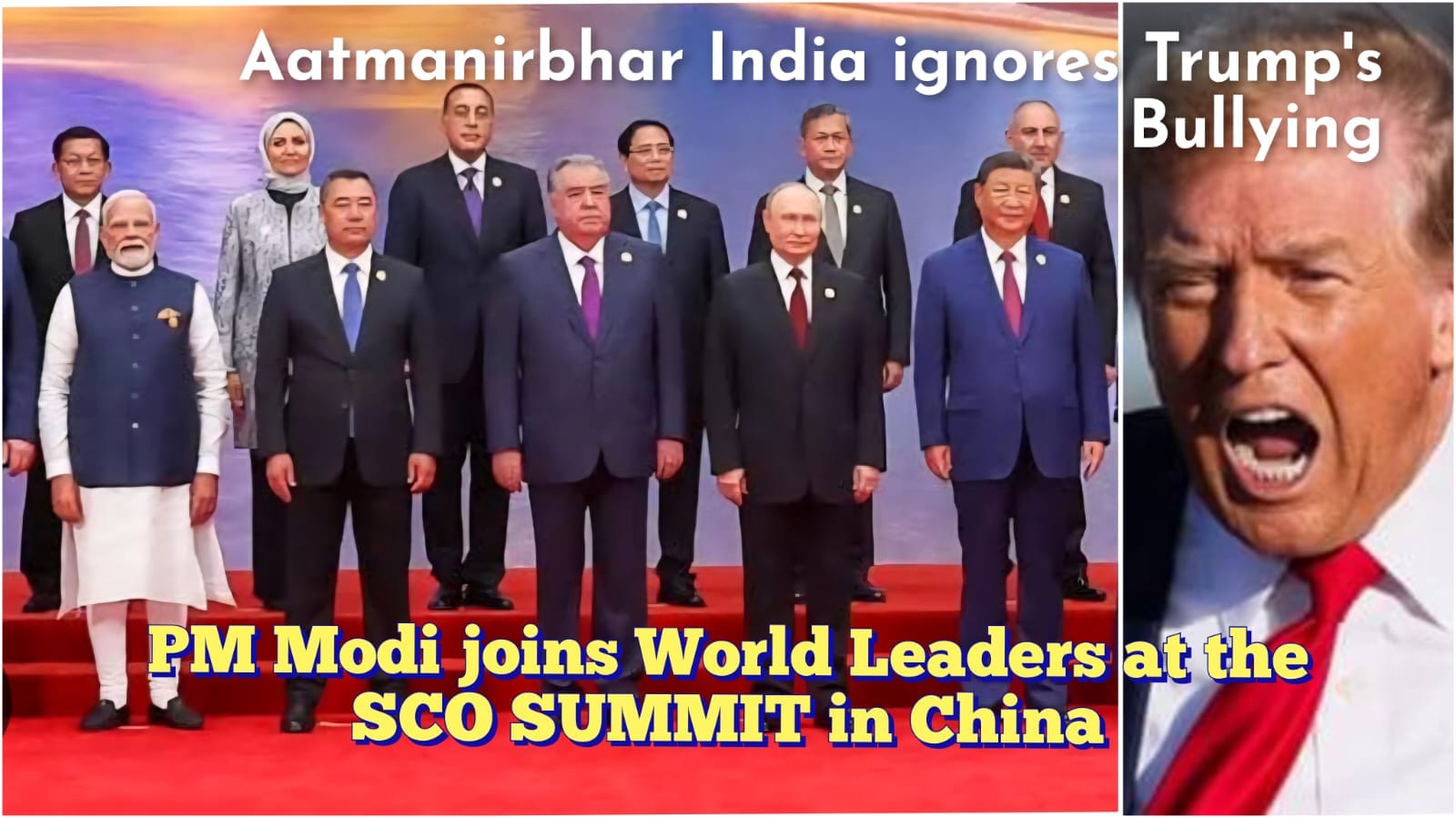
And this weekend, as the leaders of three of the world’s largest countries — Prime Minister Narendra Modi, Russian President Vladimir Putin, and Chinese leader Xi Jinping — gather in Tianjin for the 25th Shanghai Cooperation Organization (SCO) Summit, one figure will be conspicuously absent: America’s sparring partner, President Donald Trump.