Cancer remains one of the most complex health challenges confronting the world, but the way the medical community understands, detects and treats the disease is changing rapidly. From precision medicine and immunotherapy to molecular diagnostics, artificial intelligence and cellular therapies, oncology today is a field of constant discovery — where established evidence, emerging science, clinical experience and continuing research increasingly intersect.
It is against this backdrop that Nanavati Max Super Speciality Hospital will host the 2nd edition of Max Cancer Congress 2026 on October 3 and 4, bringing together more than 500 oncology experts, clinicians, researchers and healthcare professionals from across India and beyond.
The two-day congress is expected to become a platform for conversations around some of the most important questions in contemporary cancer care — how cancers can be detected earlier, how treatment can become more personalised, which emerging therapies are translating into clinical practice, and where further research and evidence are still needed.
The conversations surrounding cancer are not limited to breakthroughs. They also involve myths, misconceptions, evolving evidence and the need to continually reassess what is understood about a disease that behaves differently across patients and cancer types. That makes knowledge exchange particularly significant.
From Early Detection to More Personalised Cancer Care
According to recent estimates based on ICMR-NCDIR data cited by the hospital, India recorded an estimated 15,69,793 new cancer cases in 2025, compared with 14,26,447 cases in 2021. Maharashtra alone accounted for an estimated 1,30,465 new cases in 2025, placing the state among those with a high cancer burden. Against these numbers, early detection remains an important area of focus.
The Max Cancer Congress programme will examine developments including liquid biopsy, multi-cancer early detection, molecular diagnostics, AI-assisted cancer care, molecular tumour boards and precision medicine — areas that are contributing to a deeper understanding of disease biology and potentially more individualised treatment planning.
The programme will bring together specialists across Breast, Gastrointestinal, Thoracic, Gynaecology, Head & Neck, Radiation, Haematology, Molecular & Genetics and Urology oncology.
The emphasis is increasingly on collaboration rather than isolated specialties, with multidisciplinary approaches bringing together surgeons, medical oncologists, radiation specialists, pathologists, geneticists, radiologists and other experts to evaluate the most appropriate treatment pathway for individual patients.
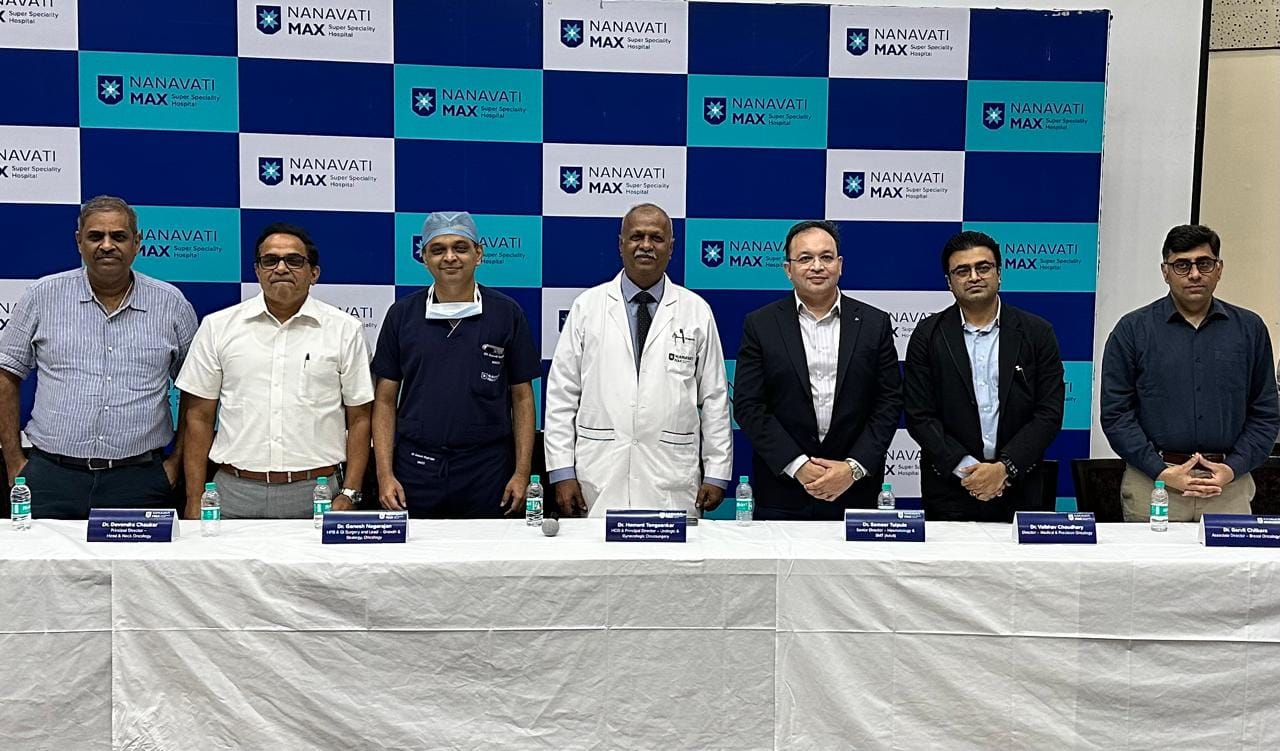
Dr Ganesh Nagarajan, Vice Chairman – HPB & GI Surgery and Lead – Growth & Strategy, Oncology, Nanavati Max Super Speciality Hospital, said the future of cancer care would be shaped by how effectively different specialties work together. “Max Cancer Congress 2026 provides an important platform for experts to exchange knowledge, evaluate emerging evidence and discuss innovations that can help improve patient outcomes across the cancer care continuum,” he said.
Where Science Is Advancing — and Still Asking Questions
Several of the areas being discussed at the congress represent significant developments in oncology, while also reflecting a field where research continues.
Immunotherapy, targeted therapies, cellular therapies and molecular profiling are changing treatment strategies for selected patients and cancers. The congress will also examine CAR-T therapy, bispecific antibodies and stem cell transplantation, alongside evolving evidence across different cancer types.
Dr Muzammil Shaikh, Principal Director – Medical Oncology, Nanavati Max Super Speciality Hospital, noted that several developments that once appeared futuristic are increasingly becoming part of oncology practice. “The growing role of immunotherapy, cellular therapies and AI-enabled tools is creating new possibilities for improving cancer diagnosis, treatment selection and long-term disease management,” he said.
Precision oncology is similarly moving the conversation beyond a one-size-fits-all approach.
Dr Hemant B. Tongaonkar, HOD & Principal Director – Urologic & Gynecologic Onco-surgery, Nanavati Max Super Speciality Hospital, pointed to the growing importance of molecular profiling and precision surgery in helping clinicians make more informed treatment decisions.
The discussions will extend across specific cancer types as well.
In thoracic oncology, experts will examine the challenges of lung cancer and the role of timely diagnosis, minimally invasive surgery, advanced imaging and precision therapies.
Breast cancer discussions will explore advances in screening, molecular diagnostics and increasingly tailored treatment approaches, while head and neck oncology will look at the importance of preserving speech, swallowing and quality of life alongside disease control.
Haematological cancers will form another important area of discussion, particularly as advances in cellular therapies, targeted treatments and stem cell transplantation continue to evolve. CAR-T therapy, in particular, represents an area of growing clinical interest for selected patients with difficult-to-treat and relapsed disease.
Taking the Conversation Beyond the Conventional
Among the specialised sessions at Max Cancer Congress 2026 will be an Interventional Radiology masterclass on Irreversible Electroporation (IRE), examining patient selection, treatment techniques, clinical evidence and real-world case discussions.
The breadth of the programme reflects the larger reality of contemporary oncology: progress does not come from a single breakthrough alone. It comes through research, clinical trials, accumulated experience, multidisciplinary discussion, technological innovation and the willingness of medical professionals to continually question and improve existing approaches.
The congress will also bring together oncology expertise from different parts of the country, including perspectives beyond India’s largest metropolitan healthcare centres. Such interaction can be particularly relevant as the country looks at how advances in cancer diagnosis and treatment can translate into broader access to specialised care.
For patients and families, however, the terminology surrounding modern oncology can often be difficult to navigate. Precision medicine, immunotherapy, molecular testing, cellular therapies, AI-assisted diagnosis and advanced interventions may sound promising, but their relevance can vary according to cancer type, stage, individual patient characteristics and the evidence available for a particular treatment.
This makes responsible medical communication just as important as medical innovation.
A Conversation About What Comes Next
Max Cancer Congress 2026 is positioned as a forum for that conversation — bringing together clinicians, researchers and healthcare professionals to examine what is known, what is changing and where oncology needs to go next.
Dr Garvit Chitkara, Associate Director – Breast Oncology, Nanavati Max Super Speciality Hospital, described the transformation in breast cancer care through advances in screening, molecular diagnostics and tailored treatment.
Dr Devendra Chaukar, Principal Director – Head & Neck Oncology, highlighted the increasing importance of organ-preservation strategies, while Dr George Karimundackal, Principal Director – Thoracic Surgery, emphasised the role of multidisciplinary management in lung cancer.
Dr Sameer Tulpule, Senior Director – Haematology & BMT (Adult), also pointed to the rapidly changing landscape of haematological cancers, where a deeper understanding of disease biology and newer cellular therapies are contributing to increasingly personalised approaches.
Together, these perspectives underline a common thread: the future of cancer care is not defined by one technology, one specialty or one treatment. It is being shaped by the collective ability of the medical community to learn, question, test, collaborate and translate evidence into better patient care.
As oncology continues to evolve, the most meaningful breakthroughs may ultimately be measured not simply by how advanced a treatment sounds, but by whether it helps patients access earlier diagnosis, more appropriate treatment, better quality of life and improved outcomes.
That is the larger conversation Max Cancer Congress 2026 will bring to Mumbai on October 3 and 4.