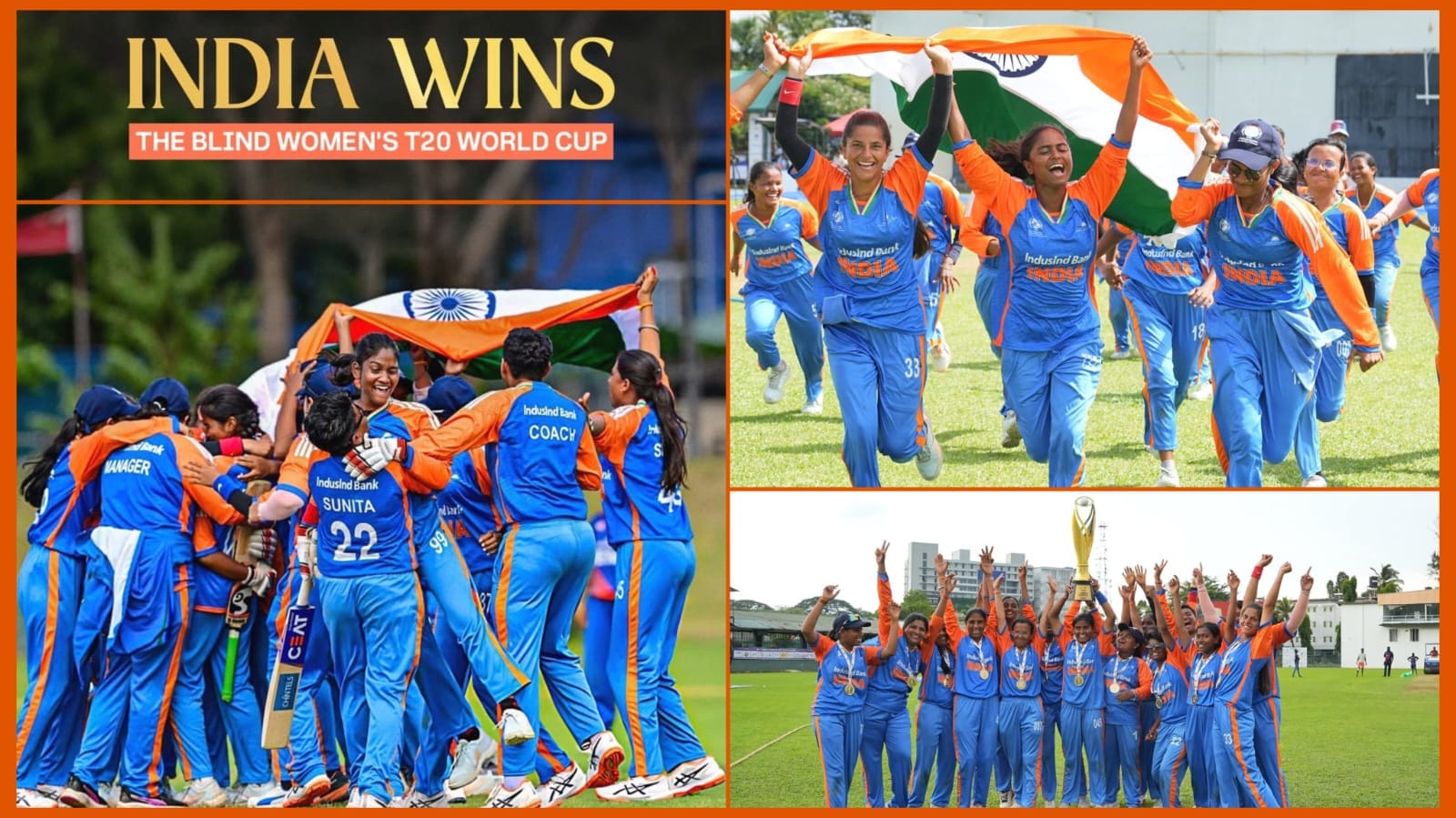
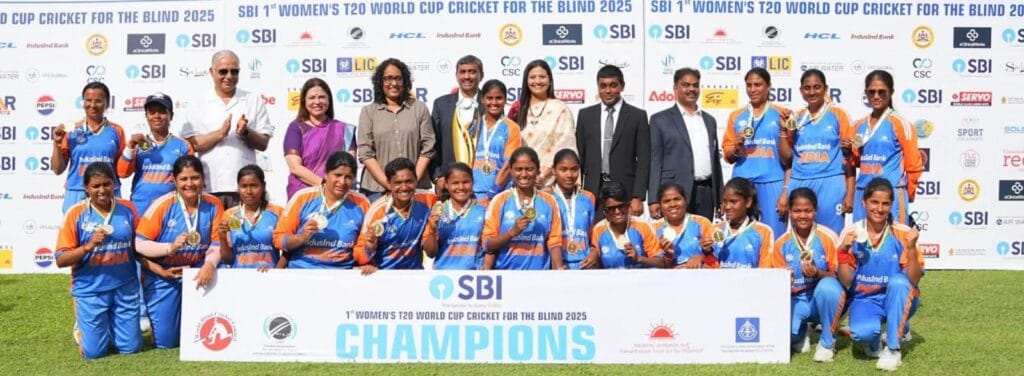
In a landmark moment for Indian sport, the nation’s Blind Women’s Cricket Team has created history by winning the first-ever Blind Women’s T20 World Cup, held in Sri Lanka. India defeated Nepal by seven wickets in a commanding final at the iconic P Sara Oval in Colombo, marking the beginning of a new era for women’s blind cricket. This victory not only marks a milestone for Indian cricket but also shines a global spotlight on women’s adaptive sports.
A Dominant Campaign From Start to Finish
India’s journey to the title was nothing short of flawless. After restricting Nepal to 114/5, the Indian batters chased down the target with ease, reaching 115/3 in just 12.1 overs. The star of the final was Phula Saren, who delivered a scintillating 44 off 27 balls, anchoring the chase with confidence and composure.
The team remained unbeaten throughout the tournament, securing victories over Sri Lanka, Australia, Nepal, USA, and Pakistan in the league stage, followed by another strong performance against Australia in the semi-finals.
A Unique Format Celebrating Ability Over Disability
Blind cricket is played with 11 players, using a white plastic ball filled with ball bearings that rattle as they roll — a distinctive feature that allows players to track the ball through sound.
This format not only tests skill but also showcases extraordinary perception, teamwork, and athleticism.
The tournament was co-hosted by India and Sri Lanka, with matches held across Delhi, Bengaluru, and Colombo, underlining the growing support for inclusive sports across the subcontinent.
Global Recognition and Appreciation
The historic triumph drew accolades from across the cricketing world, including a special message from ICC Chairman Jay Shah, who praised the team for their pioneering spirit and inspirational performance.
In a post on X, he wrote : “Congratulations to the @blind_cricket Indian team for winning the first-ever Blind Women’s T20 World Cup, an event that re-defines the limits of ‘ability’ and inspires differently abled athletes in India and around the world.”
A Win Beyond the Trophy
India’s victory is more than just a sporting achievement — it is a powerful statement about inclusivity, resilience, and the boundless potential of athletes with disabilities.
For the players, the World Cup is not only a title but a symbol of recognition, belief, and the growing support for blind cricket in India.
As the nation celebrates this unprecedented triumph, the Indian Blind Women’s Cricket Team has firmly etched its place in sporting history — inspiring generations of athletes and proving once again that the spirit of cricket knows no boundaries.
